PAGE 4
What happens when development comes at the cost of people’s livelihoods?
This is the harsh reality that over 200 households in Traditional Authority (T/A) Chulu in Kasungu are grappling with.
The communities have been impacted by the construction of a new perimeter fence around Kasungu National Park.
According to some of the area’s chiefs and civil society leaders that Weekend Nation spoke to, the new boundary has been set 300 metres from the original one, hence rendering 106 households homeless and stripping them of their gardens, a primary source of food and income.
The affected families, including vulnerable ones headed by women, children and the elderly, face an uncertain future.
Group village head (GVH) Kasheleka, whose people have resided in the area since 1932, expressed his dismay saying: “Now, animals have more rights than people.”
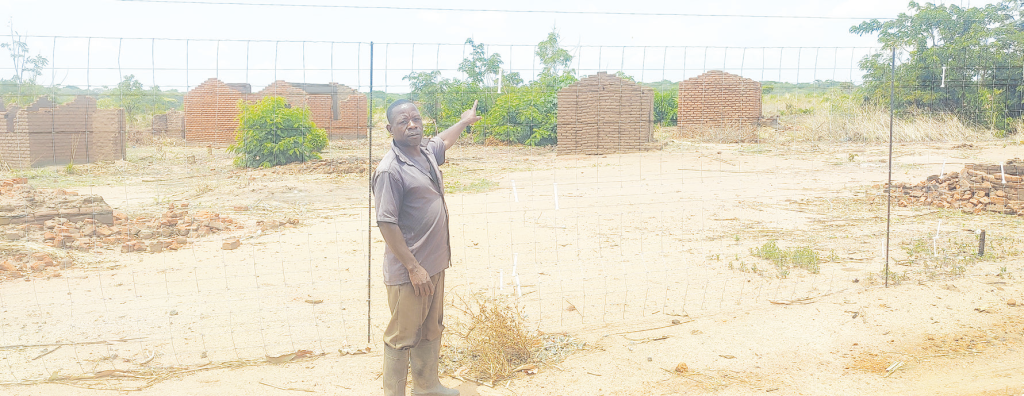
In an interview on Wednesday, the chief observed a disparity in response to human and animal incidents.
He said: “Last year, more than five patrol vehicles, full of game rangers, raided the area after some poachers from Zambia killed an elephant. But when a man was killed by an elephant in this village, only one game ranger came to follow up the incident.”
GVH Mpata added that the community has suffered because the elephants were brought to the park before construction of the fence.
One of those affected by the exercise, Noel Kwenda, 45, a resident of Kasheleka Village, shared his plight.
“My 40 acres of land have been taken away. I used to grow burley, soya, and maize, producing over 100 bales of burley and 400 bags of maize. I am left with only two acres,” he said, describing how the fence curved unnaturally to include his land.
Another villager, Gerald Phiri from Nkhuzikuzi Village recounted a similar story.
He said: “17 households, including my family and our elderly father, lost our home and over 12 hectares.”
Mary Nyirenda, a mother of four, said she had her 40 hectares taken away, and she has a few options to survive.
When contacted last week, Minister of Tourism Vera Kamtukule said the boundary tracing exercise identified about 8.5 kilometres of the most encroached area around Chulu.
Said Kamtukule: “About 66 households were affected. Most of the gardens were protruding into the park, with the affected households having their houses outside the protected area.”
The minister assured that the exercise is following the gazetted park boundary as interpreted by the Department of Lands.
“We don’t anticipate more households to be affected as the boundary after the affected area is not encroached, except at Kabuma where an estimation of households that are illegally settling there is not known as there is a stay order against the court eviction order,” she said.
Kamtukule added that government, through the Ministry of Justice, is taking all necessary steps to vacate the stay order
However, Chulu Planning for the Future director Charles Bainett, criticised the exercise as a violation of people’s rights.
He explained: “The authorities have deliberately encroached onto people’s shelters and gardens. Our efforts to intervene have yielded nothing. At first, the people were informed that only 10 metres will be taken
but to everybody’s surprise 300 metres have been encroached.”
Bainett suspects corruption among some chiefs, saying some of them have remained quiet since the exercise started.
In an interview yesterday, Senior Chief Chulu confirmed that a number of people have been displaced and their gardens taken away, but she said people are now safer with the fence than before.
She explained that before the fence was constructed a lot of families suffered loss due to destruction by elephants.
Chulu said: “The authorities said they used a map to trace the boundary and there was not much we could do.”
Another activist, who is director of Matenje Care for Life in the area, echoed Bainett’s concerns, alleging that the exercise targeted ordinary villagers as it has spared land belonging to chiefs and councillors.
He said: “The fence could make a V-shape to take in the land. We tried to reach out to the authorities, including the district commissioner, who came and inspected the boundary and promised to look into the matter, but nothing has happened since.”
Kasungu DC James Kanyangalazi said he was in a meeting and asked for more time before commenting on the matter.
Meanwhile, Kamtukule has indicated that government efforts to fence the park dates back to around 1980s, adding that the last fence was constructed between 1990 and 2000, but was vandalised.
She said in 2020 government started the fence construction again, aiming at mitigating human-elephant conflicts which were rampant then, especially around traditional authorities Lukwa, Mwase and Kawamba.
The minister added that government has been constructing 20 kilometres of the fence each year with financial support from the International Fund for Animal Welfare.
Kasungu National Park, which covers 2 316 square kilometres, is the second largest park in the country
n